GizmoBench guides
Board Foot Formula: 3 Worked Examples and a Browser Calculator for DIY
The board foot formula is (thickness in inches × width in inches × length in feet) ÷ 12. If you’d rather keep every measurement in inches, use (thickness × width × length in inches) ÷ 144, since one board foot equals 144 cubic inches, the volume of a 1-inch by 12-inch by 12-inch plank. Use the mixed-unit version when your length is in feet, and the all-inches version when every dimension is already in inches.
TL;DR:
- Using actual dimensions reduces estimated board feet by about a third compared to nominal sizes, significantly affecting pricing and cut lists.
- Most softwood yards price by nominal size and round totals, while hardwood suppliers often measure actual sizes individually before rounding.
- In mixed measurements, converting all dimensions to decimal inches and using a calculator prevents errors in large or complex orders.
- Adding 10% to 25% extra when ordering accounts for waste, defects, and mismatched grain, especially with high-end or figured hardwoods.
- Confirming whether a supplier uses nominal or actual size measurements and whether their totals include waste prevents shortfalls from miscommunication.
Table of Contents
- How the board foot formula actually works
- Worked examples for common lumber sizes
- Ordering lumber: totals and waste allowance
- Nominal vs. actual sizes: why your 2×4 isn’t 2 inches
- When to reach for a calculator instead of doing it by hand
- Try GizmoBench’s calculators for quick board-foot math
- Sources
- FAQ
How the board foot formula actually works
A board foot measures volume, not length or area. That’s the part that trips up most people buying lumber for the first time, since a “foot” of board and a “board foot” of lumber are two completely different things.
Here’s the logic: one board foot equals 144 cubic inches, which is exactly a 1 inch by 12 inch by 12 inch block of wood. If your length is already in feet, multiplying thickness (inches) by width (inches) gives you square inches, and you only need to divide by 12, not 144, because the length in feet already accounts for the extra factor of 12. Keep every dimension in inches instead, and you divide by the full 144. Both paths land on the same answer.
For repeat calculations at the lumberyard, woodworkers commonly use a shortcut called the factor method: Factor = (Thickness × Width) ÷ 12. Once you have that factor for a given board size, board feet = factor × length in feet. Calculate it once for a 2×6, and you can multiply by any length all afternoon without redoing the division.
A few practical notes before you start plugging in numbers:
- Convert fractions to decimals first: 3/4 inch becomes 0.75, and 5 1/2 inches becomes 5.5.
- Round to two decimal places for pricing purposes; most yards do the same.
- Keep thickness and width in inches and length in feet unless you’re using the all-inches formula.
Pro Tip: Write the factor on a sticky note taped to your tape measure case for the sizes you buy most often. Skipping the division every single time is where the real time savings show up.
Worked examples for common lumber sizes
Numbers make this formula click faster than any explanation. Here are three examples using real board sizes, worked both ways so you can check your own math against them.
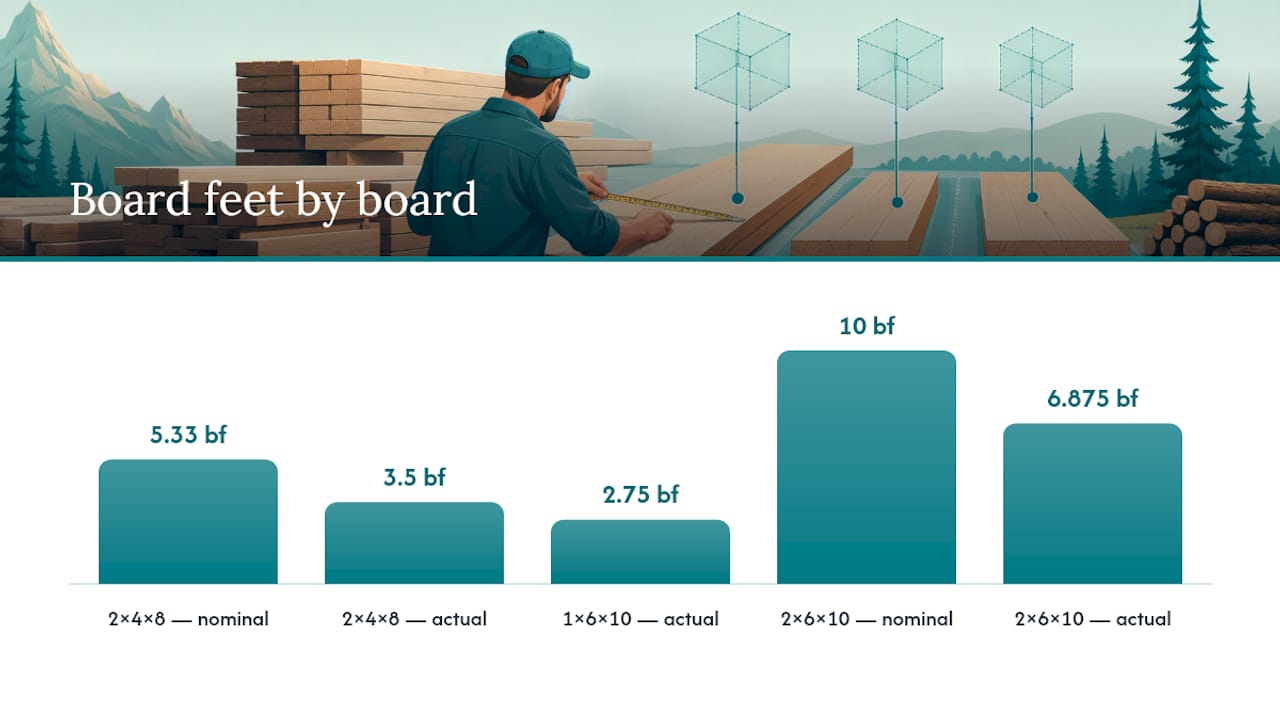
- A 2×4×8 using nominal dimensions. Treat it as 2 inches by 4 inches by 8 feet: (2 × 4 × 8) ÷ 12 = 5.33 board feet. That’s the number most online calculators spit out if you enter “2x4” without adjusting for actual size.
- The same 2×4×8 using actual dimensions. A finished 2×4 is really 1.5 inches by 3.5 inches. So (1.5 × 3.5 × 8) ÷ 12 = 3.5 board feet, almost 2 full board feet less than the nominal figure. That gap is exactly why lumber pricing and cut-list planning use different numbers.
- A fractional 1×6×10, all in inches. Say your actual stock measures 3/4 inch thick by 5 1/2 inches wide by 96 inches long (an 8-foot board sold as “10 feet” nominal doesn’t apply here, so use real numbers): (0.75 × 5.5 × 96) ÷ 144 = 2.75 board feet.
For a 2×6×10 using nominal sizes, the math runs (2 × 6 × 10) ÷ 12 = 10 board feet. Using actual dimensions of 1.5 by 5.5 inches, it drops to (1.5 × 5.5 × 10) ÷ 12 = 6.875 board feet.
Once you know the board footage for a single piece, multiply by however many pieces you need. Fifteen of that 2×6×10 at nominal sizing comes to 15 × 10 = 150 board feet. Most suppliers round the final total up to the nearest whole or half board foot rather than rounding each individual board, which keeps small fractions from stacking into a real shortfall.
Ordering lumber: totals and waste allowance
Total board footage for a project is simply board feet per board multiplied by quantity. Order several pieces of 1×6×10 at about 4.17 board feet each (using actual dimensions of 0.75 by 5.5 inches), and your project total is their quantity multiplied by that number.
That raw total rarely matches what you should actually buy. Practitioner guidance from the woodworking trade suggests padding your order to cover defects, crooked boards, and test cuts:
- Rough carpentry and framing: add roughly 10% for cutting waste and the occasional bad board.
- Furniture work with matched grain: add 20 to 25%, since you’re rejecting boards for color and figure, not just structural defects.
- Highly figured or expensive hardwood: lean toward the higher end of that range, since replacing a mismatched board later costs more than buying a little extra now.
Before you place an order, confirm three things with your supplier: whether their quoted size is nominal or actual, how they round fractional lengths, and whether their board footage total already includes their own waste factor. Skipping that conversation is how a “200 board foot order” turns into a trip back to the yard.
Nominal vs. actual sizes: why your 2×4 isn’t 2 inches
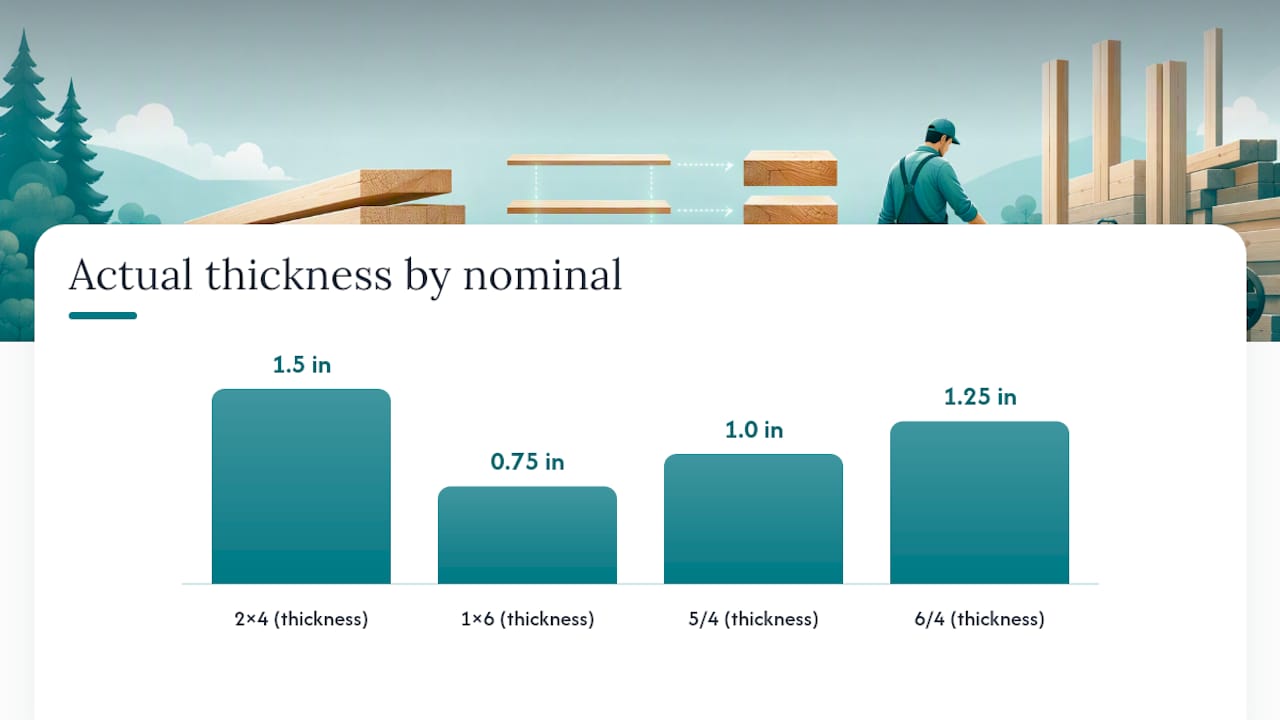
A “2×4” is a nominal size, a label based on the board’s dimensions before it was planed and dried. After milling, that same board typically measures 1.5 inches by 3.5 inches, which is why the nominal and actual board foot calculations in the examples above landed on different numbers.
The gap between nominal and actual sizing runs anywhere from a quarter inch to a full inch, depending on the nominal dimension:
- 2×4 nominal → 1.5" × 3.5" actual
- 1×6 nominal → 0.75" × 5.5" actual
- 5/4 (quarter-sawn thickness) → roughly 1" actual
- 6/4 → roughly 1.25" actual
Pricing conversations at most lumberyards use nominal sizing, while your actual cut list has to use real dimensions. Mixing the two up is the single most common board-foot mistake reported by practitioners, and it’s an easy one to make when you’re staring at a tag that just says “2×4.”
Hardwood and softwood dealers also handle rounding differently. Softwood yards generally price by nominal dimension and round the final board foot total, while hardwood mills more often measure each board’s actual surface area piece by piece before multiplying by thickness, then round at the individual board level. If you’re buying rough hardwood, ask which method your supplier uses before you compare their quote to your own calculation.
When to reach for a calculator instead of doing it by hand
Manual math works fine for one or two boards. It starts breaking down once you’re juggling fractional widths, mixed nominal and actual sizes, or a full cut list with 30 different lengths, since a single dropped decimal point can throw off your entire material order.
That’s the point where an in-browser calculator earns its keep:
- Use a volume calculator whenever you want to double check the raw cubic inch to board foot relationship, especially on oddly dimensioned stock that doesn’t match a standard nominal size.
- Use a unit converter first if your measurements are in a mix of feet, inches, and fractions, so everything is in clean decimal inches before you touch the board foot formula.
- Combine the two when a supplier quotes metric dimensions or gives you a cubic-foot total instead of board feet.
GizmoBench’s volume calculator runs entirely in your browser, so your project dimensions never leave your device and you don’t need to create an account to use it.
Try GizmoBench’s calculators for quick board-foot math
GizmoBench gives you a faster path to an accurate total than reaching for a pencil and a scratch pad every time a cut list changes. The volume calculator handles the cubic inch to board foot conversion directly, and pairing it with the unit converter lets you clean up fractional or mixed measurements before you run the math, whether you’re entering inches, feet, or a stray metric dimension from an imported board. Both tools run locally in your browser, so your project numbers stay on your own device with no upload and no account required. If you’re managing a broader shop project, from a client invoice to a resume for a woodworking apprenticeship application, GizmoBench’s everyday tools cover a good chunk of the calculations that come up alongside a materials list. Open the volume calculator and paste in your dimensions to see the total before you call the yard.
Sources
The Ohio State University Extension fact sheet on measuring standing trees defines the board foot and its formulas. WoodworkingTraining’s board foot calculator guide explains the factor method in more depth. For hardwood and softwood measurement differences, see the Units of Measure guidance document, and for a printable reference, the Mountain Woodworker board foot chart lists common sizes at a glance.
- College of Food, Agricultural, and Environmental Sciences — measuring standing trees / units
- WoodworkingTraining — board feet calculator & formula explanation
- Units of Measure guidance (hardwood/softwood measurement differences)
FAQ
How many board feet is a 2x4x8?
Using nominal dimensions, a 2×4×8 comes to 5.33 board feet: (2 × 4 × 8) ÷ 12. Using the actual milled size of 1.5 by 3.5 inches, the same board is 3.5 board feet, so check which figure your supplier is quoting before you compare prices.
Why does the board foot formula divide by 144?
Dividing by 144 converts a volume measured in cubic inches into board feet, since one board foot equals exactly 144 cubic inches. If your length is already in feet rather than inches, you divide by 12 instead, because the unit conversion is already partly done.
How many board feet is a 2x6x10?
At nominal size, a 2×6×10 works out to 10 board feet: (2 × 6 × 10) ÷ 12. At actual size (1.5 by 5.5 inches), it drops to 6.875 board feet, roughly a third less material than the nominal number suggests.
How many board feet are in a 2x3x10?
Using nominal dimensions, a 2×3×10 is (2 × 3 × 10) ÷ 12 = 5 board feet. Actual dimensions on a nominal 2×3 typically run close to 1.5 by 3 inches, which brings the real total down significantly.
What’s the difference between the board foot formula and a simple volume calculation?
A board foot formula is really just a volume calculation with a built in unit conversion, since 144 cubic inches always equals one board foot. If you’d rather skip the manual division, GizmoBench’s volume calculator handles the cubic inch conversion directly from whatever units you enter.