GizmoBench guides
60/30/10 Raised Bed Soil Mix and Exact 4x8 Volumes
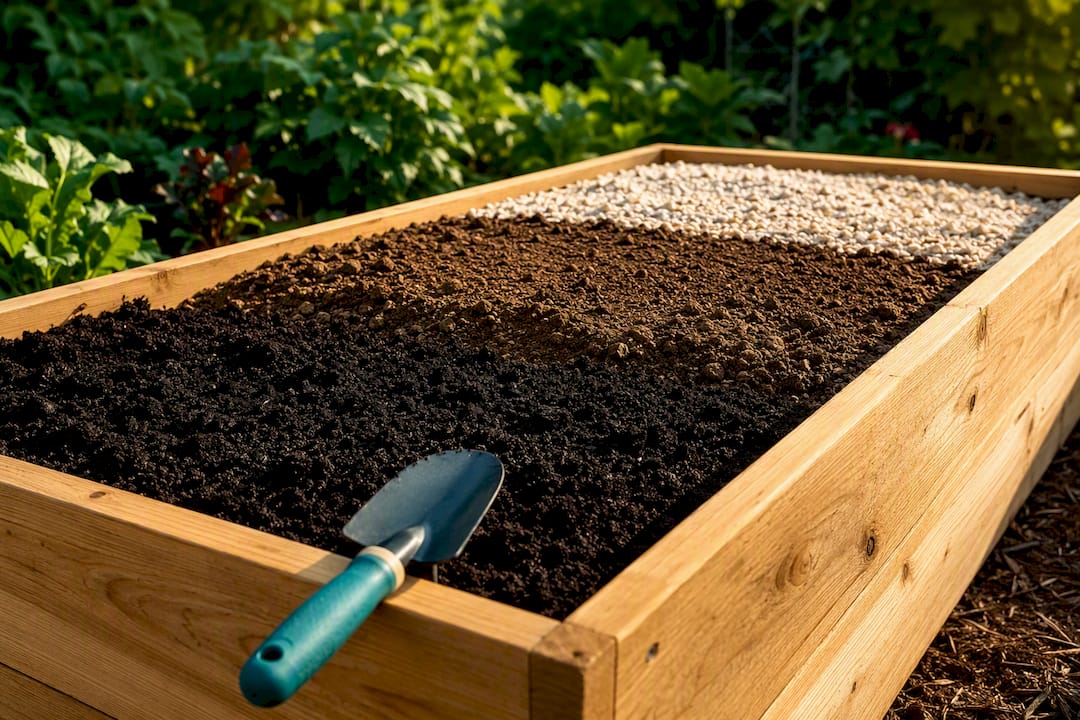
The best starting recipe for most raised beds is a blend of topsoil, finished compost, and aeration material such as perlite or coarse sand, roughly following a commonly recommended proportion. This blend gives roots mineral structure, steady nutrition, and enough drainage to avoid waterlogging. If you’re filling a shallow bed or a bed that behaves more like a large container, Mel’s Mix, which contains equal parts compost, peat or coconut coir, and coarse vermiculite, is a solid alternative built for intensive planting.
TL;DR:
- The standard 60/30/10 soil mix ratio provides a balanced foundation of mineral content, organic matter, and pore space suitable for most vegetable beds, with adjustments needed for heavy clay or sandy native soils.
- Mel’s Mix, using equal parts compost, peat or coconut coir, and vermiculite, suits shallow or container-like beds but requires more frequent fertilization due to the lack of mineral reserves.
- Proper sourcing involves inspecting delivered bulk soil or compost for debris, contamination, and test results, while adding a 10-20% overage for settling during transport or initial use.
- Calculating the correct volume for your bed based on measurements and applying a safety margin ensures you order enough soil without excess, with tools like GizmoBench simplifying this process.
- Maintaining soil health requires testing pH and nutrients every one to two years, and addressing issues like compaction or ponding by loosening surface soil and adjusting drainage rather than full replacement.
Table of Contents
- What Goes Into a Raised Bed Soil Mix
- Topsoil, Compost, Coir, and Aeration: What Each Ingredient Actually Does
- How Do You Source Bulk or Bagged Soil Safely?
- How Much Soil Do You Need for a Raised Bed?
- What Happens to Raised Bed Soil After You Fill It?
- Which GizmoBench Tools Help With Soil Math?
- Why Does Soil pH Matter in a Raised Bed?
- What Nutrients Does a Raised Bed Soil Mix Need?
- Does Compost Quality Really Change Raised Bed Performance?
- How Do You Keep Soil-Borne Pests and Diseases Out of a Raised Bed?
- Plan Your Soil Order With GizmoBench Calculators
- Sources
- FAQ
What Goes Into a Raised Bed Soil Mix
The 60/30/10 ratio isn’t arbitrary. It reflects what a plant root actually needs from the medium around it: enough mineral content to hold its shape and store water between waterings, enough organic matter to feed soil microbes and slowly release nutrients, and enough pore space so roots don’t drown after a heavy rain. Trowelful’s raised bed guide lays out this exact ratio and the reasoning behind each component’s share.
Skipping the aeration fraction is the most common mistake gardeners make when they eyeball a mix instead of measuring it. A bed that’s 70% topsoil and 30% compost with no perlite or sand will compact within a season, especially in clay-heavy regions. On the other end, gardeners sometimes fill beds with pure compost or bagged potting mix because it’s convenient. Extension and gardening resources caution against both: pure compost shrinks dramatically as it decomposes, and potting mix is often too light and nutrient-poor on its own to sustain a full growing season of vegetables in an open bed, according to Garden Insider’s breakdown of raised bed ratios.
The default 60/30/10 blend
This is the mix to reach for if you’re filling your first bed or don’t have a specific reason to deviate. It works for tomatoes, peppers, squash, brassicas, and most annual vegetables. The topsoil anchors moisture and mineral nutrition; the compost feeds biology; the aeration fraction (perlite, vermiculite, or coarse builder’s sand) keeps the whole thing from turning into a brick after the first winter.
- Best for: general vegetable and flower beds, first-time raised bed builders, beds deeper than 10 inches
- Watch for: using unscreened topsoil with heavy clay content, which can still compact even at 60%
Mel’s Mix (1:1:1)
Popularized through square-foot gardening methods, Mel’s Mix uses equal volumes of compost, peat moss or coconut coir, and coarse vermiculite. There’s no mineral soil in the formula at all, which makes it extremely light and fast-draining, closer to a container medium than a traditional garden soil.
- Best for: shallow beds (6 to 8 inches), rooftop or patio raised beds, gardeners prioritizing weed-free starting conditions
- Watch for: faster nutrient depletion since there’s no mineral reserve. Expect to feed more frequently than a topsoil-based mix, and expect it to dry out quicker in hot climates
Adjusting for crop type and site conditions
Different crops respond differently to the same base ratio. Leafy greens and shallow-rooted herbs tolerate a slightly lighter mix with more aeration, since they don’t need deep structural soil. Garden Insider notes that adjusting proportions by crop is more effective than treating one ratio as universal.
Site conditions matter as much as the crop.
High-aeration and heavy-soil variants
Two situations call for a deliberate departure from the standard ratio:
- Clay-heavy native soil or clay-based bulk topsoil: increase aeration to 15 to 20% of total volume and consider adding coarse sand alongside perlite for structural drainage.
- Very sandy topsoil: reduce aeration to 5% and increase compost slightly to 35%, since sandy blends need the extra organic matter to hold moisture.
- Deep beds (18 inches or more): you don’t need premium mix all the way down. A cost-saving approach borrowed from hugelkultur practices uses clean, untreated woody debris or coarse organic fill in the bottom third of the bed, reserving the top 10 to 12 inches for your quality growing mix.
Volume examples for a standard 4x8 bed
A 4 foot by 8 foot bed at 12 inches deep holds 32 cubic feet of growing medium, which is roughly 1.19 cubic yards. Apply the 60/30/10 split and you need about 19.2 cubic feet of topsoil, 9.6 cubic feet of compost, and 3.2 cubic feet of aeration material.
The same footprint at 18 inches deep holds 48 cubic feet, or about 1.78 cubic yards. That breaks down to 28.8 cubic feet of topsoil, 14.4 cubic feet of compost, and 4.8 cubic feet of aeration material. The jump from 12 to 18 inches doesn’t just add depth, it adds 50% more volume, which is worth knowing before you order material by the truckload.
Topsoil, Compost, Coir, and Aeration: What Each Ingredient Actually Does
Every ingredient in a raised bed soil mix has a specific job, and understanding those jobs helps you troubleshoot a bed that isn’t performing instead of just dumping more compost on it and hoping.
Topsoil is the mineral backbone of the mix. It holds a water reserve between irrigation cycles and gives roots something with actual body to anchor into, unlike a purely organic medium that can dry out and rewet unevenly. Not all bagged or bulk topsoil is equal, though. Screen it through a half-inch mesh if you’re getting it from a bulk supplier to remove rocks, roots, and debris, and be skeptical of topsoil that’s mostly subsoil clay dug from a construction site.
Finished compost supplies the microbial life and slow-release nutrients that make a raised bed outperform straight dirt. The word “finished” matters here. Unfinished or actively decomposing compost consumes nitrogen and oxygen as it continues breaking down, which can rob your plants of nitrogen right when they need it most. Finished compost should smell earthy, not sour or ammonia-like, and it should look uniformly dark and crumbly with no recognizable food scraps.
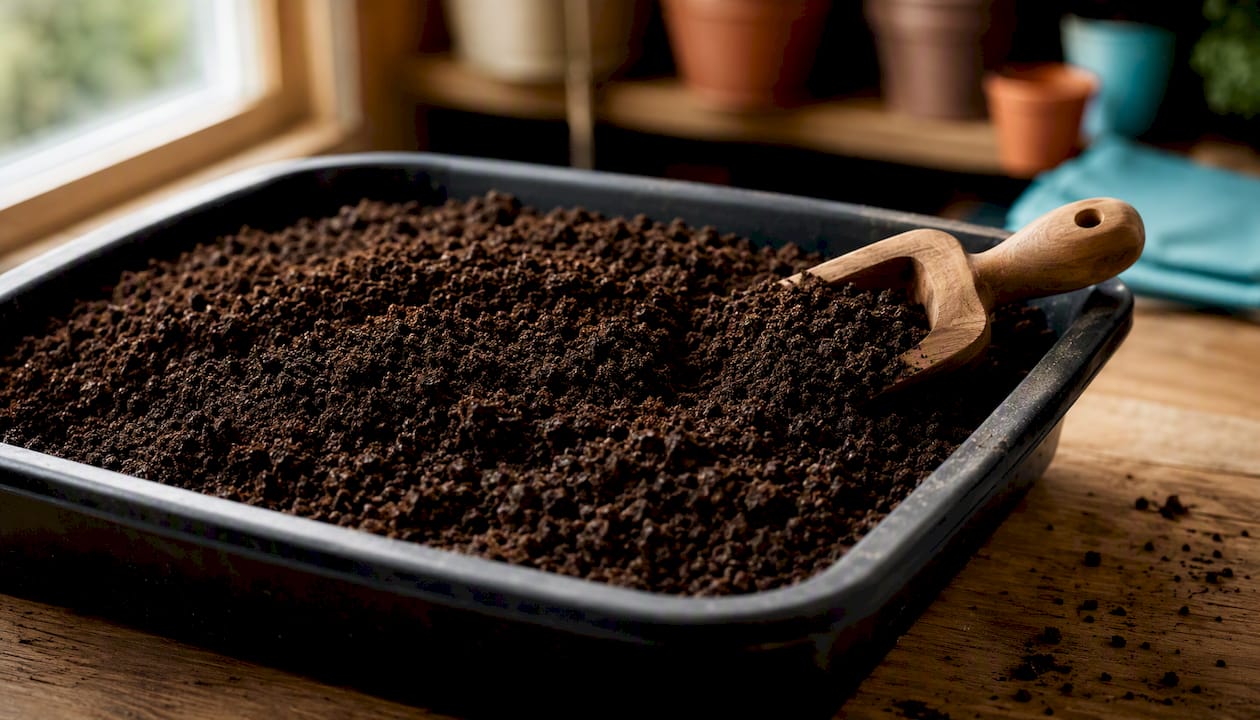
Peat moss versus coconut coir is a debate worth having before you buy either. Peat has been the traditional choice for decades because it holds moisture well and resists compaction, but it’s a slow-renewing resource harvested from peat bogs, and coconut coir has become the more sustainable substitute with nearly identical structural properties. The one thing to watch with coir: it’s often shipped compressed and can carry residual salts from processing. Iowa State Extension and other sources recommend fully rehydrating and rinsing coir before mixing it in if salt buildup is a concern, particularly for salt-sensitive seedlings.
Vermiculite, perlite, and coarse sand all serve the aeration role, but they aren’t interchangeable. Vermiculite holds more water in its layered structure, which makes it a better fit for hot, dry climates or fast-draining sandy topsoil. Perlite is lighter and drains faster, favoring wetter climates or heavier native soils where waterlogging is the bigger risk. Coarse sand is the cheapest of the three and adds weight and drainage but holds almost no water itself, making it best paired with compost-heavy mixes that can compensate.
- Vermiculite: better water retention, good for dry climates and containers
- Perlite: better drainage, good for wet climates and heavy soils
- Coarse sand: cheap bulk drainage, best combined with high-compost blends
Additives like lime, wood ash, and rock phosphate get recommended often, but none of them belong in a mix by default. Lime raises pH and only helps if a test shows your soil is genuinely acidic. Wood ash does the same but also adds potassium, which can oversupply a bed that doesn’t need it. Rock phosphate is a slow-release phosphorus source, useful for phosphorus-deficient soil but wasted money otherwise. Add any of these only after a soil test tells you there’s a deficiency to correct.
It’s easier to rake in more perlite than to remove excess once it’s mixed through 12 inches of soil.*
How Do You Source Bulk or Bagged Soil Safely?
Bulk delivery is almost always cheaper per cubic yard than bagged soil once you’re filling more than one or two beds, but it comes with less quality control. Bagged mixes are consistent and easy to test in small batches, but you’ll pay a premium, and Gardener’s Supply notes that bagged raised-bed mixes often lean peat-heavy and can settle more over time than a bulk mineral-based blend. Blending some screened topsoil into a bagged mix can help offset that settling.
Whichever route you choose, run through this checklist before the material goes into your bed:
- Ask the supplier what’s in the compost feedstock. Municipal compost programs sometimes accept mixed yard waste and food scraps that can carry herbicide residue or contaminants; ask directly whether the source material has been tested.
- Inspect the delivery on arrival. Good topsoil and compost should look dark and uniform, smell earthy rather than sour or chemical, and feel crumbly rather than sticky or rock-hard.
- Check for visible debris and weed seeds. Bits of plastic, glass, or construction debris in bulk topsoil are a red flag for the supplier’s sourcing practices, and visible undecomposed plant material can carry weed seeds straight into your bed.
- Send a sample to a lab if you have any doubt about contamination. University of Maryland Extension recommends lab testing bulk soil or compost when the source or history is unknown, prioritizing results for salts, heavy metals, and pH before planting anything edible.
- Return or switch suppliers if you see mold odors, chemical smells, or a load that’s visibly inconsistent in color and texture from one scoop to the next. These are signs of poor storage or a mixed, unreliable source pile.
A quick supplier conversation, asking where the compost feedstock comes from and whether they’ve tested for contaminants, catches most problems before they ever reach your bed, a point echoed in the same University of Maryland Extension guidance.
How Much Soil Do You Need for a Raised Bed?
Calculating soil volume is simple arithmetic, but it’s the step most gardeners skip, which is exactly how people end up either three bags short or with a driveway full of leftover topsoil.
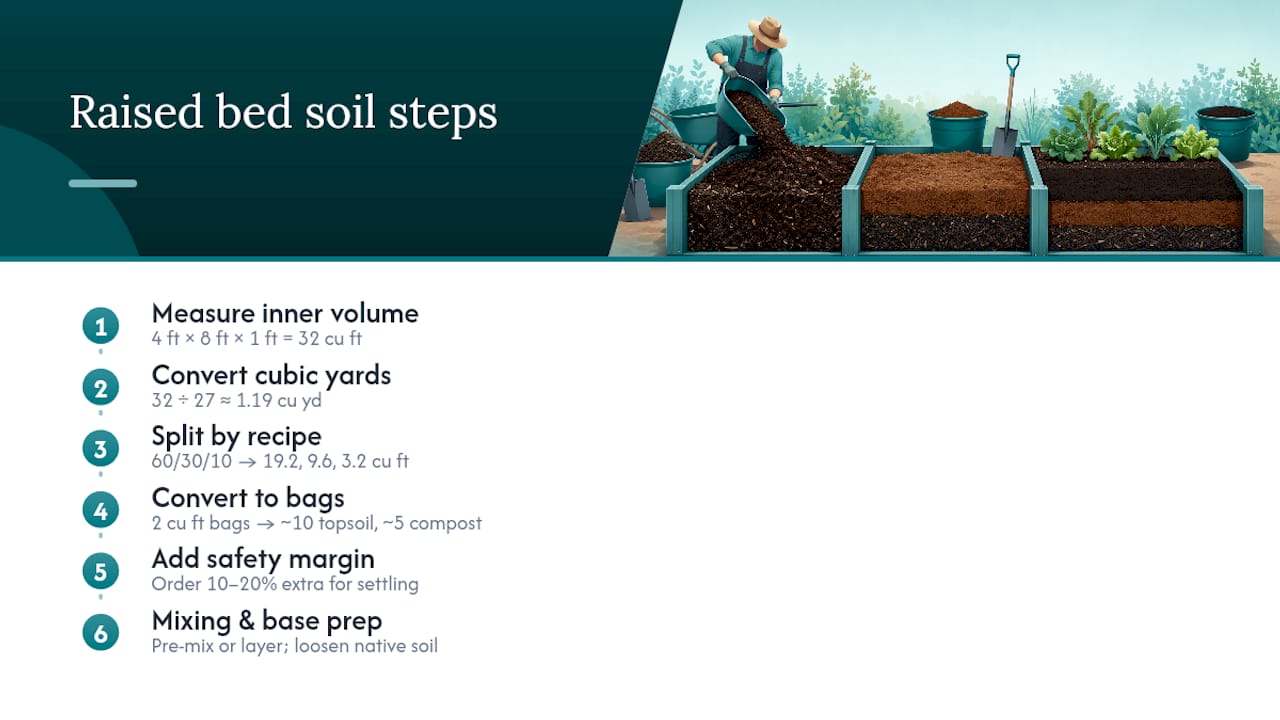
Step 1: Measure the inner dimensions of your bed. Use the inside length, inside width, and the depth you plan to fill, not the outer frame dimensions. For a standard 4 foot by 8 foot bed filled to 12 inches (1 foot), the math is straightforward:
Cubic feet = length × width × depth = 4 × 8 × 1 = 32 cubic feet
Convert to cubic yards by dividing by 27 (since one cubic yard equals 27 cubic feet): 32 ÷ 27 ≈ 1.19 cubic yards. This is the same core approach a dedicated soil calculator uses, and running your own numbers through GizmoBench’s volume calculator saves you from doing the cubic-feet-to-cubic-yards conversion by hand.
Step 2: Apply your recipe percentages to the total volume. Once you know the total cubic footage, multiply by each ingredient’s share of the recipe. For the 32 cubic foot example at 60/30/10, that’s 19.2 cubic feet of topsoil, 9.6 cubic feet of compost, and 3.2 cubic feet of aeration material. A ratio calculator makes quick work of splitting any total volume across a recipe’s proportions without doing the multiplication by hand each time.
Step 3: Convert cubic feet into bags or bulk yard orders. Bagged soil and compost are commonly sold in 1.5 or 2 cubic foot bags, though sizing varies by brand, so check the bag label before you calculate. A 2 cubic foot bag count for 19.2 cubic feet of topsoil comes to about 10 bags; for 9.6 cubic feet of compost, about 5 bags.
Step 4: Add a safety margin for settling. Order 10 to 20% more material than your raw calculation, a margin recommended by The Gardening Nook’s raised bed guide to cover initial settling and handling losses during mixing and transport.
Here’s how the math plays out for the two most common bed depths:
Pre-mix versus layer-and-blend. You can either combine all three ingredients in a wheelbarrow or tarp before filling the bed, or add them in layers directly into the bed and turn them with a garden fork. Pre-mixing gives you a more uniform blend from top to bottom and is easier to eyeball for consistency, but it’s more physical labor upfront and requires a mixing surface. Layer-and-blend is faster to get material into the bed but risks uneven pockets of straight compost or straight topsoil if you don’t turn it thoroughly, especially in the corners.
One more detail worth remembering before you fill: don’t treat the base of the bed as a sealed layer sitting on top of your yard. Iowa State Extension advises loosening and blending the top few inches of native soil with your new mix, so roots and water can move between the two instead of hitting an abrupt barrier at the bed’s base.
What Happens to Raised Bed Soil After You Fill It?
New raised bed soil doesn’t stay at its filled level. Expect visible settling within the first month as organic matter compresses and trapped air pockets collapse, more with peat or coir-heavy mixes like Mel’s Mix, less with mineral-heavy blends. The practical response isn’t to refill the whole bed. Add a layer of finished compost each spring to bring the level back up and replenish the organic fraction that decomposition consumes over a season.
Compaction and ponding show up as symptoms rather than causes: water sitting on the surface for more than a few minutes after rain, or a crust that resists a garden fork more than an inch or two deep. Fix it by loosening the top 3 to 4 inches with a fork (avoid a rototiller in a raised bed, it destroys soil structure) and working in additional perlite or coarse sand rather than more compost, which won’t solve a drainage problem on its own.
Nutrient imbalance and water stress often mimic each other. Yellowing leaves can mean a nitrogen shortfall, but they can just as easily mean the bed is drying out faster than you’re watering, especially in a lightweight mix like Mel’s Mix. Check the soil moisture at root depth before assuming it’s a fertility problem, and if symptoms persist despite consistent watering, that’s when a nutrient test earns its cost, rather than guessing with a bag of fertilizer.
Full replacement is rarely necessary. It’s warranted mainly after a confirmed soil-borne disease outbreak, persistent root rot, or a contamination finding from a lab test, cases where amending won’t fix the underlying problem. Annual top-ups handle the ordinary wear of a growing season.
- Settling of 10 to 15% in the first few weeks is normal, not a sign of a bad mix
- A spring compost top-up, roughly 1 to 2 inches, replaces most of what decomposition removes
- Ponding after rain usually points to compaction, not overwatering
- Full replacement is reserved for disease or contamination, not routine maintenance
Pro Tip: Keep a small notebook or phone note of what you added and when. When a bed underperforms two seasons later, knowing exactly what went into it saves you from re-guessing the whole recipe.
Which GizmoBench Tools Help With Soil Math?
Getting the ratio right on paper means little if the volume math is off, and that’s usually where ordering mistakes happen. GizmoBench’s volume calculator computes cubic feet and cubic yards directly from bed dimensions, which covers the exact calculation used in the worked examples above without you tracking decimal conversions by hand.
For beds that aren’t simple rectangles, curved borders or L-shaped layouts, the area calculator handles the footprint math first, and you multiply that result by depth to get volume. Once you know your total volume, the ratio calculator splits it across a 60/30/10 recipe or any custom ratio, and the percentage calculator is handy for quickly working out your 10 to 20% overage on top of the base number.
- Volume calculator: turns bed dimensions into cubic feet and cubic yards
- Area calculator: handles irregular bed shapes before you apply depth
- Ratio calculator: splits total volume across recipe percentages
- Percentage calculator: adds a settling overage to your order total
None of these tools run in the browser knows your supplier’s bulk density or bag sizing. A calculator returns geometric volume, cubic feet or yards, not weight, and bag sizes vary by brand (commonly 1.5 or 2 cubic feet). Confirm those numbers with your supplier before finalizing an order, since the math only works if the inputs match what’s actually on the pallet.
Why Does Soil pH Matter in a Raised Bed?
Most vegetables and flowers grow best in a pH range of roughly 6.0 to 7.0, slightly acidic to neutral, because that’s the range where key nutrients like nitrogen, phosphorus, and potassium stay chemically available to plant roots. Outside that window, nutrients can be present in the soil but locked in forms roots can’t absorb, which produces deficiency symptoms even when your compost and topsoil are otherwise high quality.
Raised beds are actually easier to manage for pH than open ground, since you control the entire mix from the start rather than working around whatever your yard’s native soil brought with it. A basic home pH test kit or soil probe gives you a reasonable starting reading; a lab test gives you a more reliable number along with nutrient levels.
If a test shows your mix running acidic (below 6.0), garden lime raises pH gradually over several weeks. If it’s running alkaline (above 7.5), which is less common but happens with some bagged mixes or hard water regions, elemental sulfur or an acidic organic matter like pine bark fines can bring it down. Either adjustment works slowly, so test again after four to six weeks rather than assuming a single application solved it. Blueberries and a handful of other acid-loving plants are the exception, they prefer pH closer to 4.5 to 5.5, and need a dedicated bed or container rather than sharing space with tomatoes and squash.
What Nutrients Does a Raised Bed Soil Mix Need?
Plants draw three macronutrients in the largest quantities: nitrogen for leaf and stem growth, phosphorus for root development and flowering, and potassium for overall plant vigor and disease resistance. A quality finished compost supplies a slow, balanced release of all three, which is one of the strongest arguments for compost over synthetic fertilizer as your primary fertility source in a new bed.
Micronutrients, calcium, magnesium, sulfur, iron, manganese, zinc, boron, and a few others, are needed in far smaller quantities, but a deficiency in any one of them can still stall growth or cause distinct symptoms like blossom end rot (often a calcium and watering-consistency issue) or interveinal yellowing (often magnesium or iron). Most balanced compost and topsoil blends supply adequate micronutrients without extra amendment.
The practical approach is to lead with compost quality rather than reaching for a fertilizer bag by default. After that, annual compost top-ups and a soil test every year or two tell you whether you actually need a targeted amendment, rather than adding nutrients speculatively. Rock phosphate and other slow-release mineral amendments belong in the mix only when a test confirms a specific shortfall, not as routine additions.
Does Compost Quality Really Change Raised Bed Performance?
Not all finished compost performs the same, even when it’s labeled “finished” on the bag or delivery ticket. Compost made from a diverse feedstock, mixed food scraps, yard waste, and manure, tends to carry a broader range of nutrients and microbial diversity than a single-source compost like straight leaf mold or pure grass clippings.
Manure-based compost, when fully composted and aged, runs higher in nitrogen and works well for heavy feeders like tomatoes and corn. Leaf mold and yard-waste compost tend to be lower in nutrients but excellent for improving soil structure and water retention, useful in a mix where you’re leaning on topsoil for most of the fertility. Municipal compost programs vary widely in quality depending on what residents contribute and how well the facility manages the composting process, which is part of why extension guidance recommends asking about feedstock and testing before you commit to a bulk load.
The texture test remains the fastest quality check available without a lab. Good finished compost crumbles between your fingers, smells like healthy forest soil, and shows no recognizable scraps of food or yard waste. Compost that’s still warm, smells sour or like ammonia, or contains visible undecomposed material hasn’t finished its process, and working it into a bed too early can tie up nitrogen your plants need immediately, exactly the problem finished compost is supposed to avoid.
How Do You Keep Soil-Borne Pests and Diseases Out of a Raised Bed?
Raised beds have a real advantage here: filling one with fresh, quality materials starts you with a clean slate that open garden soil rarely offers. Protecting that advantage comes down to a handful of consistent habits rather than any single fix.
Sourcing matters most. Contaminated compost, unfinished manure, or bulk topsoil pulled from a disease-affected site can introduce pathogens like fusarium or verticillium wilt before you plant a single seed, which is another reason the delivery inspection checklist from the sourcing section earns its place in your routine. Crop rotation within the bed itself, not planting tomatoes in the same spot for three straight years, reduces the buildup of pathogens and pests that target specific plant families.
Good drainage does double duty against disease. Waterlogged soil, the kind that results from skipping the aeration fraction in your mix, creates conditions that favor root rot and fungal pathogens. The same perlite or coarse sand that prevents ponding also reduces the standing moisture that soil-borne fungi need to thrive.
For pests specifically, healthy, well-fed soil produces stronger plants that resist insect pressure better than stressed ones. Beyond that, physical barriers like row covers during vulnerable seedling stages, and removing diseased plant material at the end of the season instead of composting it back into the same bed, are the most reliable non-chemical defenses available to a home gardener.
Plan Your Soil Order With GizmoBench Calculators
Getting a raised bed soil mix right is ultimately a math problem wearing a gardening hat, and that’s exactly where a calculator earns its keep. GizmoBench’s volume calculator turns your bed’s length, width, and depth into cubic feet or cubic yards in seconds, and it runs entirely in your browser, no account, no upload, no data leaving your device. Pair it with the ratio calculator to split that total volume across a 60/30/10 recipe, Mel’s Mix, or any custom blend you’ve adjusted for your soil and crops, and the percentage calculator when you’re tacking on that 10 to 20% settling overage before you place an order.
These tools handle the geometry and the arithmetic, the part that’s easy to get wrong at 9 p.m. with a bag calculator app and a half-charged phone. What they can’t tell you is your supplier’s actual bag size or bulk density, so confirm those numbers before you finalize quantities. Run your bed dimensions through the calculator, apply your ratio, add your margin, and you’ll walk into the garden center with a real number instead of a guess.
Sources
A handful of resources are worth keeping on hand as you plan and refill beds over the years:
- Soil to Fill Raised Beds | University of Maryland Extension
- Raised Bed Soil Mix Ratio: Topsoil, Compost, Fill Plan | Garden Insider
- Raised Bed Soil Mix — The DIY Recipe That Actually Works - The Gardening Nook
Local extension offices remain the best source for region-specific advice, since soil composition, climate, and common local pests vary enough that a national guide can only get you so far.
FAQ
What Is the Best Soil Mix for Raised Beds?
Shallow or container-style beds often do better with Mel’s Mix, an equal 1:1:1 blend of compost, peat or coir, and coarse vermiculite.
What Is the Difference Between Garden Soil and Raised Bed Mix?
Garden soil (native ground soil) is a fixed, unamended profile shaped by years of local geology and weather, while raised bed mix is a deliberately blended combination of topsoil, compost, and aeration material designed for better drainage and fertility than most native soil offers on its own. Bagged “garden soil” products are typically too dense on their own to fill a raised bed without amendment.
What Is a 3 Ingredient Garden Soil Recipe?
A common 3 ingredient recipe is the 60/30/10 blend of topsoil, finished compost, and an aeration material like perlite or coarse sand. Mel’s Mix is another 3 ingredient option, using equal parts compost, peat moss or coir, and coarse vermiculite instead.
How Much Soil Do I Need for a 4x8 Raised Bed?
A 4 foot by 8 foot bed filled to 12 inches deep needs about 32 cubic feet (roughly 1.19 cubic yards) of soil mix.
How Often Should I Test My Raised Bed Soil?
Test pH and nutrients every one to two years for routine maintenance, and test immediately if you notice unexplained plant stress, suspect contamination from a bulk material delivery, or before planting food crops in a bed filled with unknown-source soil.